Understanding Isometric Infographics Steps Background for Visual Projects
Visual storytelling has become a cornerstone of effective communication in today’s digital landscape. One of the most compelling tools in this space is the Isometric Infographics Steps Background. Whether you're a designer, marketer, or business owner, understanding how to utilize this graphic style can elevate your content and make complex ideas easier to digest.
What Is an Isometric Infographics Steps Background?
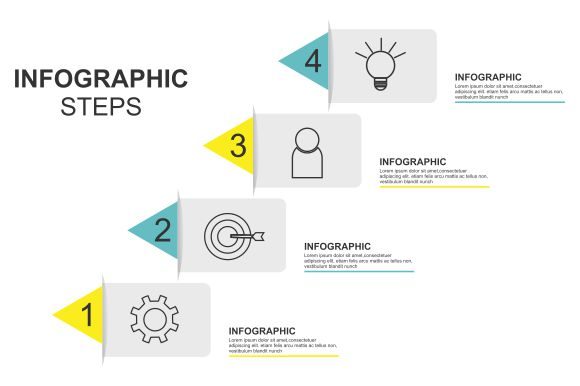
The Isometric Infographics Steps Background is a design template that uses isometric projection to create a 3D-like visual layout on a 2D surface. It typically includes a series of steps or stages represented in a visually connected, layered format. This type of background helps illustrate processes, workflows, or sequences in a way that feels both engaging and intuitive.
These graphics are often delivered in two common file formats: JPG and EPS. The JPG format ensures compatibility with most image-editing software and platforms, while the EPS file allows for scalability without loss of quality—ideal for professional design work or print media.
Key Features of Isometric Infographics Steps Backgrounds
- 3D-style visual layout with a flat design aesthetic
- Clearly defined steps or stages in a process
- Highly scalable vector format (EPS) for professional use
- Compatibility with a wide range of editing tools
- Customizable color schemes and icons
Who Benefits from Using These Graphics?
The versatility of the Isometric Infographics Steps Background makes it suitable for a wide audience. Here are some of the main user groups who can benefit:
- Content creators – For enhancing blog posts, tutorials, and explainer videos with structured visuals.
- Marketers and advertisers – To visually represent product journeys, customer acquisition funnels, or campaign timelines.
- Business professionals – Ideal for presentations, reports, and strategy decks that require process visualization.
- Educators and trainers – Useful for illustrating step-by-step learning paths or instructional sequences.
- Web designers – For creating modern, engaging UI elements that guide users through digital experiences.
Applications Across Industries
From healthcare to e-commerce, many industries can leverage the Isometric Infographics Steps Background to communicate processes clearly. Here are a few real-world examples:
- Healthcare – Explaining treatment procedures or patient journey maps.
- Technology – Illustrating software development lifecycles or integration steps.
- Finance – Visualizing investment processes or loan approval workflows.
- Retail – Showing product delivery steps or customer service escalation paths.
- Education – Outlining course modules or certification steps.
Why Use Isometric Infographics in Your Projects?
Isometric design has gained popularity for its ability to convey depth and spatial relationships without overwhelming the viewer. When applied to infographics, especially those with a Steps Background, it brings several advantages:
- Improved clarity – Complex processes become easier to follow.
- Engaging visuals – The 3D effect draws attention and increases retention.
- Professional appearance – Adds a modern, polished look to presentations and reports.
- Flexibility – Can be adapted to suit different industries and topics.
Strengths and Limitations to Consider
While the Isometric Infographics Steps Background is highly versatile, it’s important to understand its strengths and limitations before incorporating it into your work:
Strengths:
- Visually appealing and modern design style
- Supports both digital and print formats
- Easy to customize using common design tools
- Effective for explaining linear or cyclical processes
Limitations:
- May require some design knowledge to customize effectively
- Not ideal for extremely detailed or data-heavy visuals
- May need additional text or annotations for full clarity
How to Choose the Right Isometric Infographics Steps Background
Selecting the right template depends on your specific project needs. Here are some factors to consider when evaluating a download that includes JPG and EPS files:
- Intended use – Will this be used for print, web, or presentation? EPS files are better for print, while JPG is sufficient for digital use.
- Customization options – Ensure the file allows for easy color changes, icon swaps, and layout adjustments.
- Compatibility – Confirm that the files work with your preferred design software (e.g., Adobe Illustrator, Canva, Figma).
- Scalability – Vector EPS files maintain quality at any size, making them ideal for large-format printing or responsive web design.
- Visual style – Choose a template that aligns with your brand’s aesthetic and the tone of your content.
Practical Tips for Implementation
To get the most out of your Isometric Infographics Steps Background, consider the following best practices:
- Use consistent color coding for each step to improve visual flow.
- Add minimal text to avoid clutter and maintain focus on the visuals.
- Pair with icons or illustrations to reinforce the message of each step.
- Ensure the background doesn’t overpower the foreground content.
- Test the design across different screen sizes for digital use.
Conclusion: Enhancing Visual Communication with Isometric Design
Incorporating the Isometric Infographics Steps Background into your visual projects can significantly enhance how information is perceived and retained. With its modern aesthetic, clear structure, and adaptability across platforms, it’s a valuable asset for anyone looking to communicate processes in a visually compelling way.
Whether you're designing a presentation, a marketing asset, or an educational module, this type of infographic background offers a clean and effective way to guide your audience through complex ideas. Paired with the flexibility of JPG and EPS file formats, it’s a smart choice for both casual users and professional designers alike.
By understanding its features, applications, and limitations, you can make informed decisions about when and how to use the Isometric Infographics Steps Background to best effect in your next project.